Stone character
Why Taj Mahal Quartzite
A warm background, enduring natural character, and the hardness associated with quartzite make this Brazilian stone a distinctive choice for interiors.
Warm in tone, naturally hard
Taj Mahal is valued for its creamy ivory-to-beige background, with natural movement that can include taupe, gray, or soft gold. Its warm base gives a room a calm, welcoming feel and remains easy to coordinate with wood, cabinetry, and other finishes.
Quartzite is among the harder natural stones. Taj Mahal is commonly described around Mohs 7 and can offer good resistance to everyday scratching. Natural stone is not scratch-proof or stain-proof, however; performance and care depend on the selected slab, finish, fabrication, and use. Request current technical information for the material being considered.
The combination of a warm background and quartzite hardness is relatively uncommon among natural stones. Color, veining, and natural features vary from slab to slab, so review the actual selection before fabrication.
Finished pieces and project examples
These examples show the stone as fabricated pieces and in completed applications. Select an image to view its product detail page.
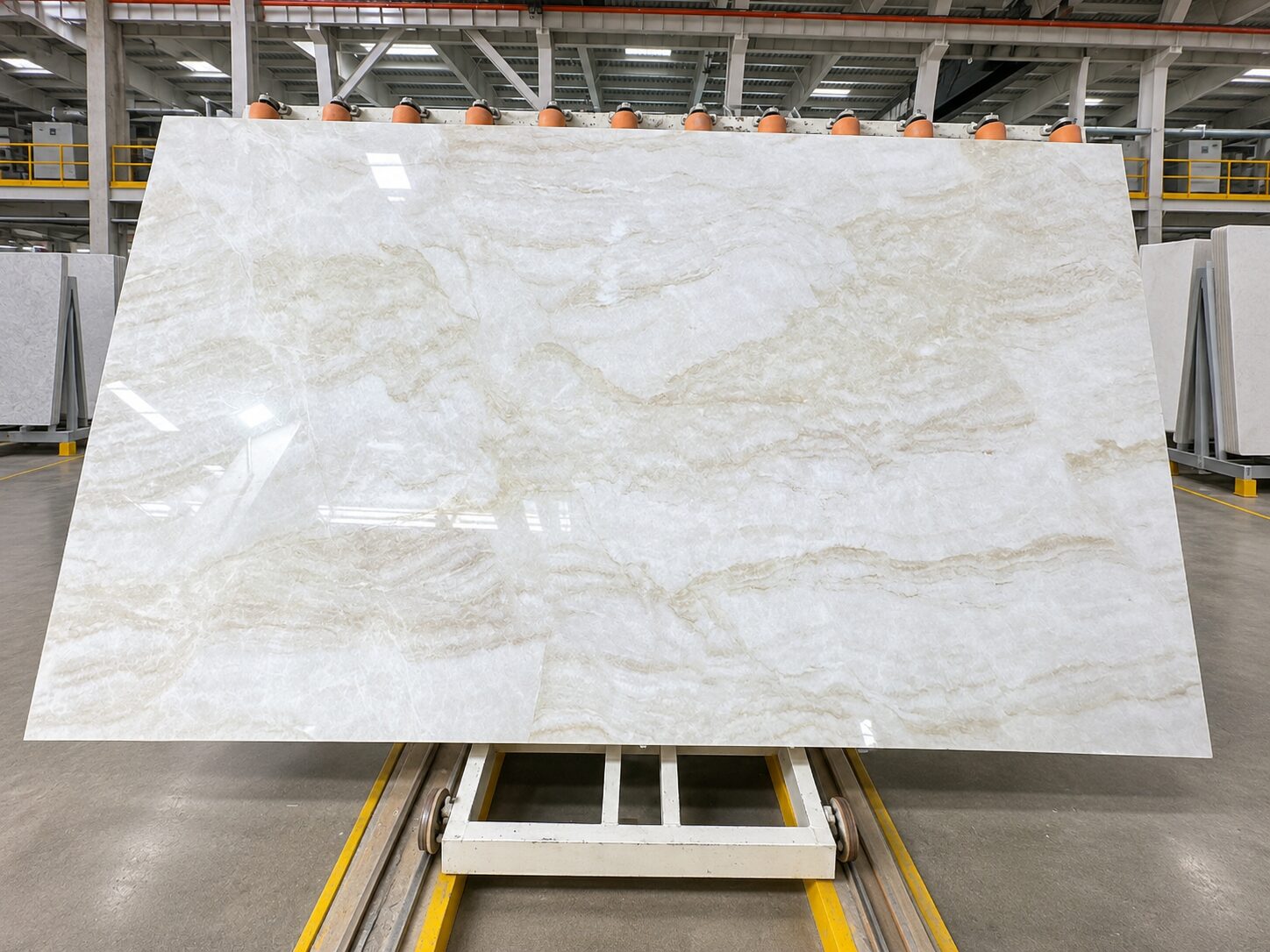
Taj Mahal Quartzite Slab
A full slab view showing the warm background and broad natural movement. Slab tone and veining vary by block.
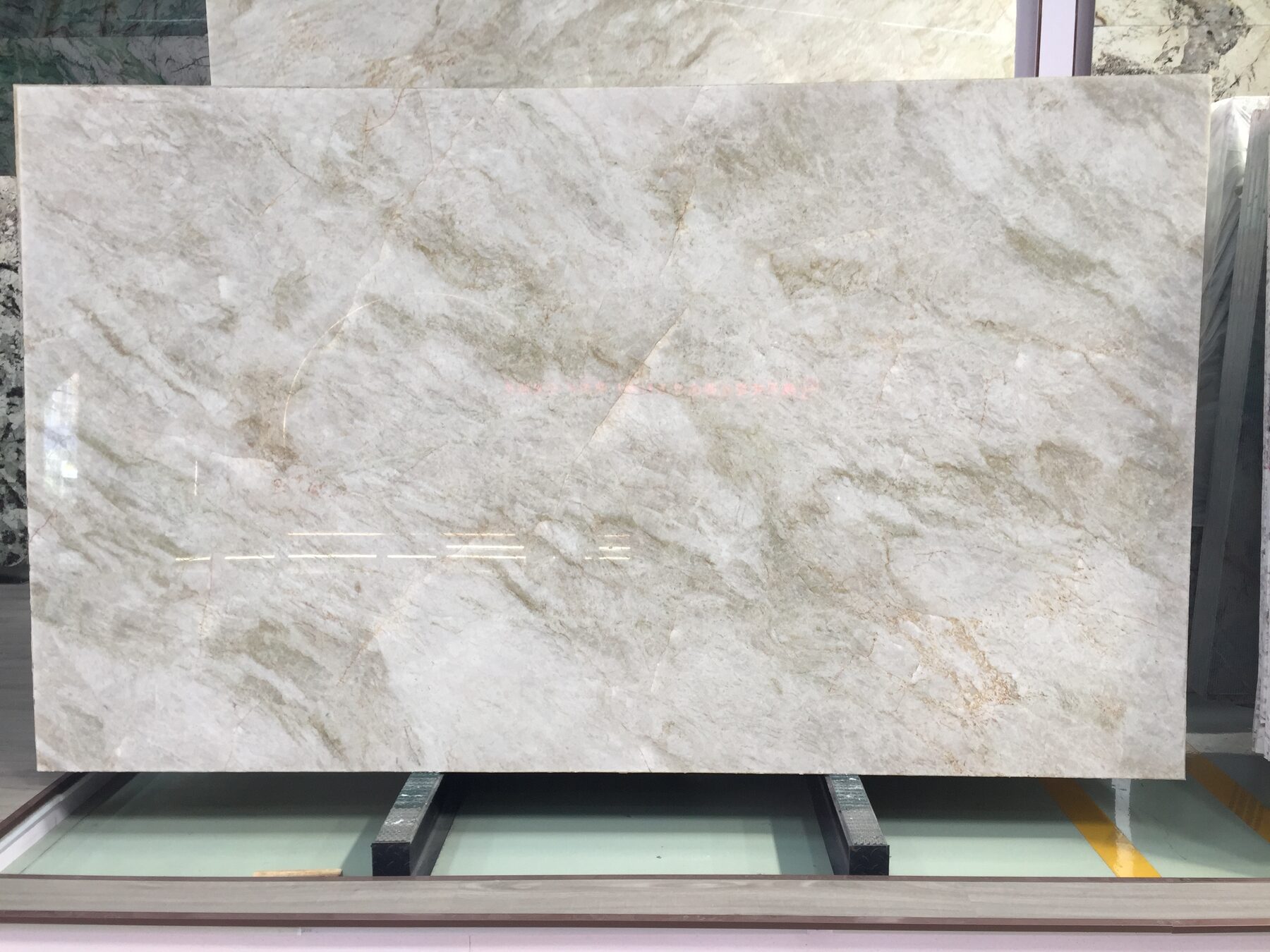
Slab Selection
Review the overall pattern and color range across the selected piece before fabrication.
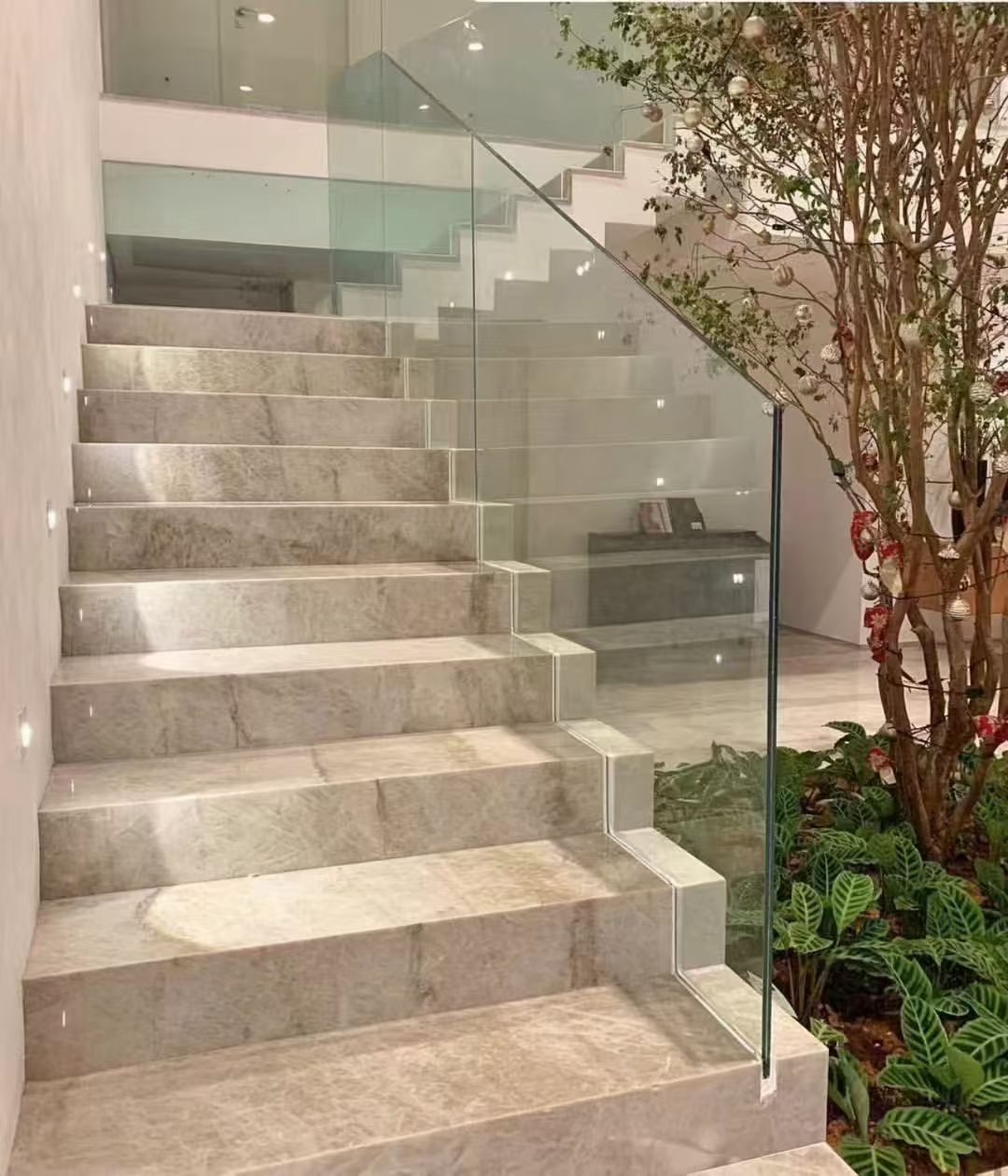
Stair Project
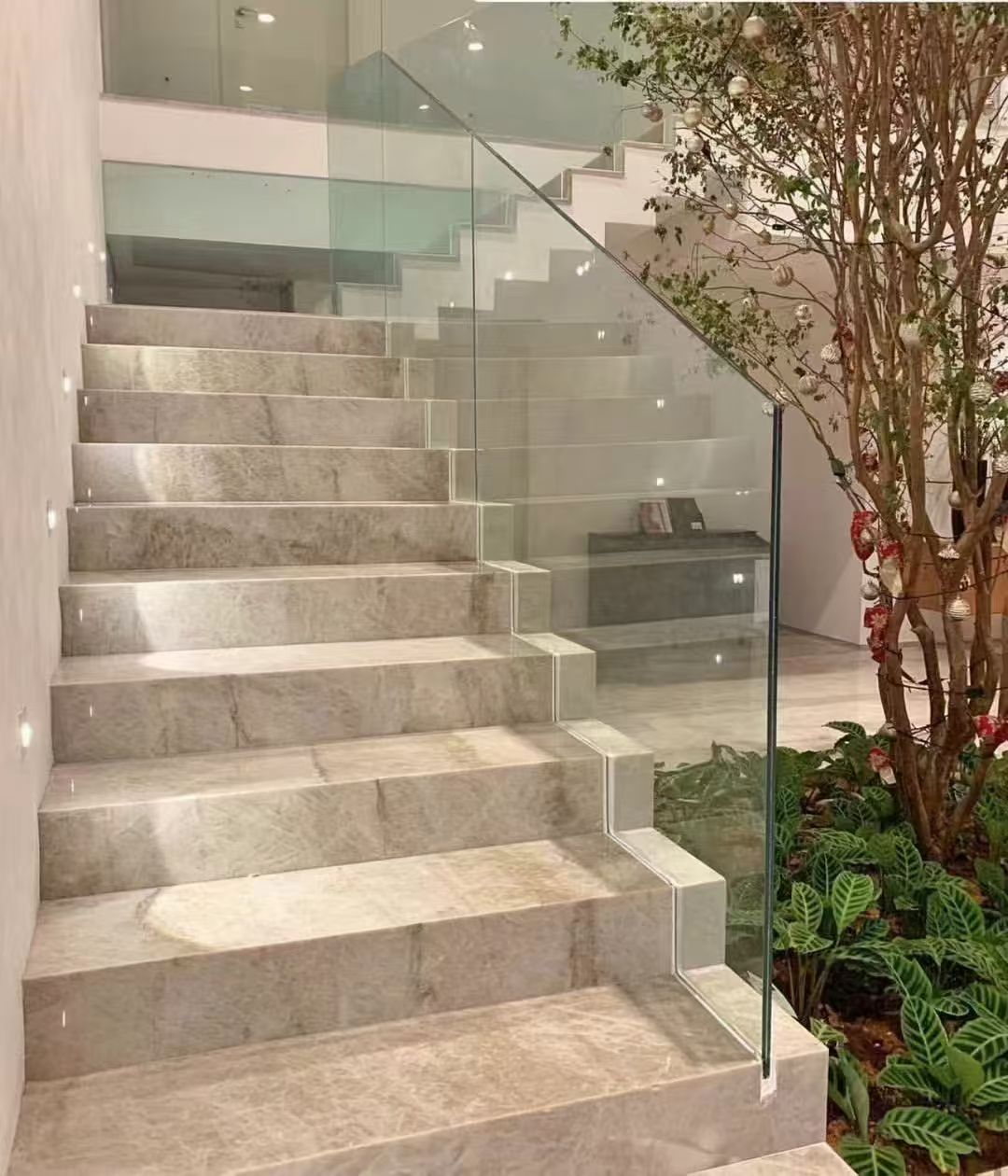
Quartzite treads and risers in a completed interior stair, set beside a glass balustrade and indoor planting.
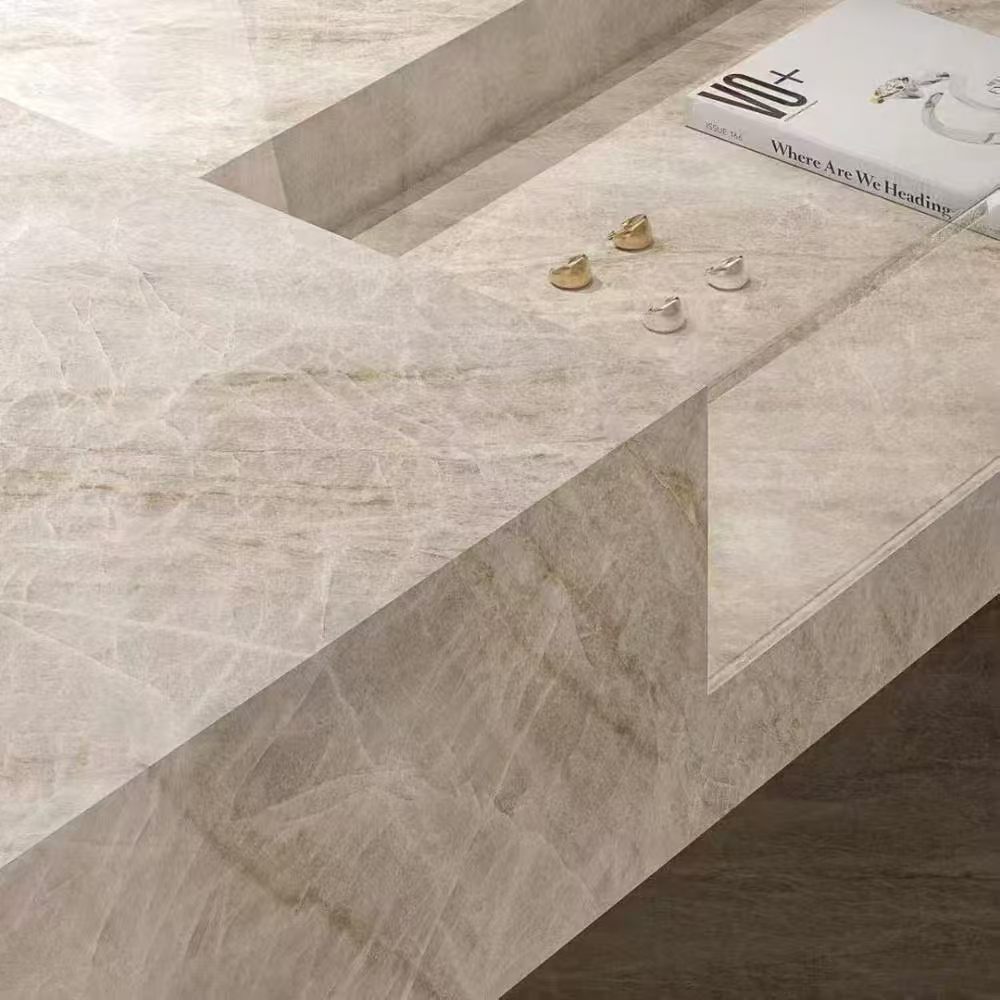
Countertop Project
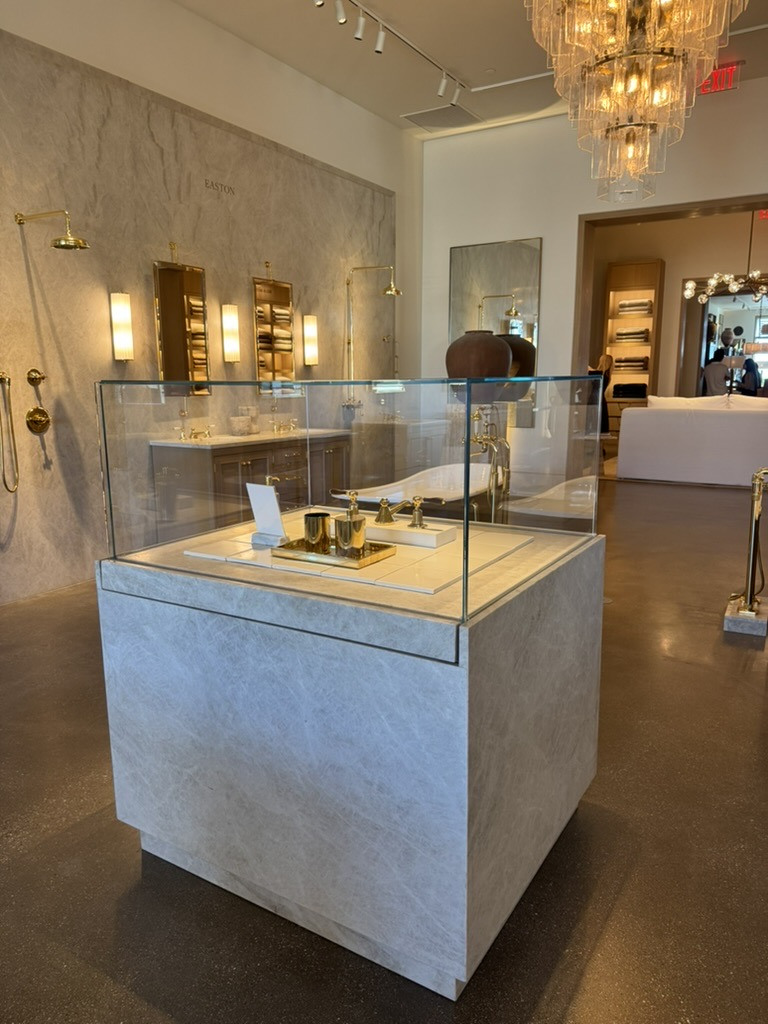
A finished application showing the stone across horizontal and vertical surfaces.
Installed applications
Project Applications
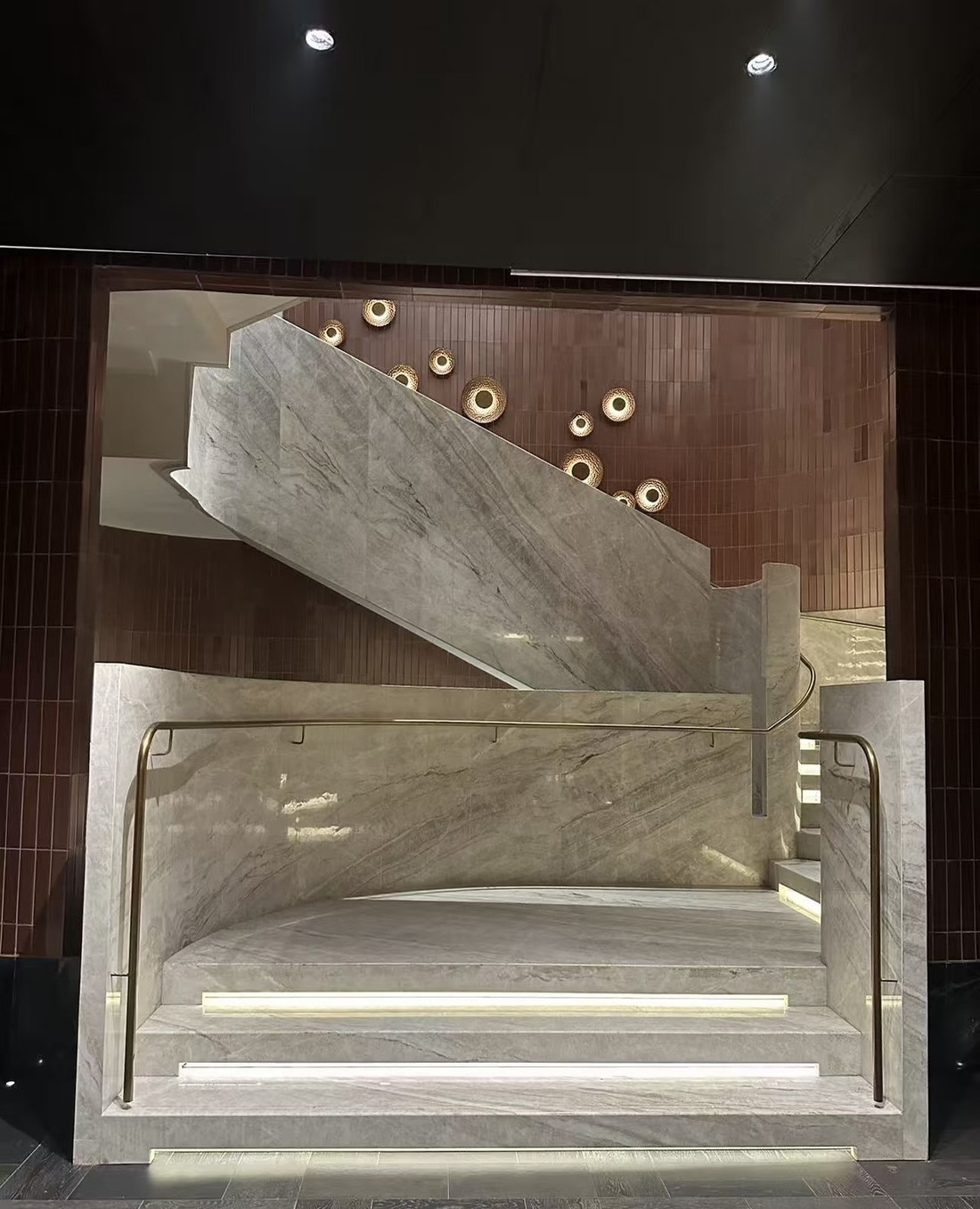
These examples show Taj Mahal quartzite in finished architectural settings. Lighting, layout, and fabrication details affect the final appearance.